If you are dealing with a death in the family, the legal language around wills and probate can feel overwhelming. The good news is that most of the key terms are straightforward once they are broken down into plain English, and understanding them early helps avoid delays, mistakes, and unnecessary stress.
This guide explains the essential wills and probate terms used in England, how they fit into the estate administration process, and what they mean in practice if you are an executor, beneficiary, or family member helping to sort things out.
What “wills and probate” actually means
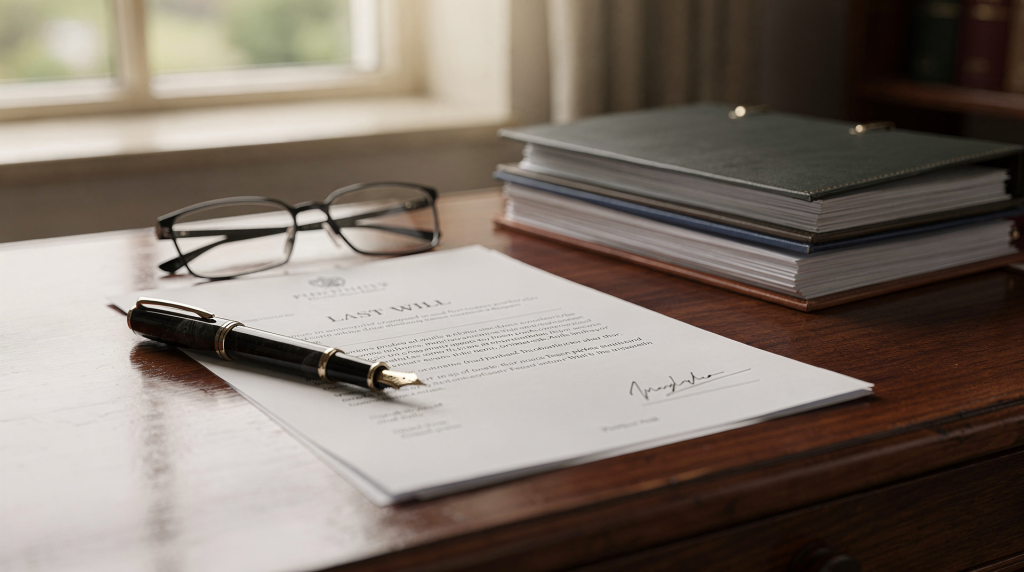
A will is a legal document setting out what should happen to a person’s estate when they die. In England, a valid will must generally be signed by the person making it and witnessed by two adults who are present at the same time. I have seen too many cases where a homemade will was signed without proper witnesses, or the witnesses were not present together, and the entire document was later challenged. Getting the formalities right at the start saves enormous difficulty later.
Probate is the legal authority to deal with the estate of someone who has died. In practical terms, it gives the executor permission to collect assets, pay debts, and distribute what remains according to the will. Think of it as the official green light from the court that allows the executor to step in and manage everything properly. Without it, banks, building societies, and the Land Registry will usually refuse to engage with the executor at all.
The core terms you need to know
| Term | Simple meaning | Why it matters |
|---|---|---|
| Will | A document stating how a person wants their estate handled after death. | It determines who inherits and who is responsible for administration. |
| Executor | The person named in the will to deal with the estate. | They are the main decision-maker for probate tasks. |
| Beneficiary | A person or organisation who receives something from the estate. | They may inherit money, property, or other assets. |
| Probate | Legal permission to administer the estate. | Usually needed before banks and institutions release assets. |
| Grant of probate | The official document confirming the executor’s authority. | Often required to prove the executor can act. |
| Intestacy | Dying without a valid will. | The estate is then distributed under the intestacy rules. |
| Letters of administration | The grant issued when there is no executor able to act. | Used instead of probate where there is no valid will or no acting executor. |
| Codicil | An update to a will. | Must be treated carefully because it can change the original will. |
| Estate | Everything the person owned, minus debts and liabilities. | This is the pool of assets to be collected and distributed. |
Executor: the person in charge
The executor is named in the will and is responsible for sorting out the estate. A will can name one executor or several, and they may need to act together. In my experience, it is always wise to appoint at least two executors, or a substitute, in case one cannot act or dies before the testator. Joint executors must make decisions unanimously, which can sometimes slow things down but also provides a safeguard.
In practice, an executor usually has to:
- locate the original will
- value the estate
- apply for probate if needed
- collect in money and assets
- pay debts, tax, and administration costs
- distribute the estate to beneficiaries
A common mistake is assuming the executor automatically gets ownership of everything. They do not. They only have authority to manage the estate on behalf of the deceased person’s instructions and the law. If the estate includes a house, the executor does not become the owner; they hold the property on trust for the beneficiaries until it is transferred or sold. This distinction is fundamental and often misunderstood by families.
Beneficiary: who receives something
A beneficiary is anyone who is meant to receive a gift under the will. That gift may be:
- a specific item, such as jewellery or a car
- a fixed sum of money
- a share of the residue of the estate
- the family home or a share in it
Beneficiaries are often surprised by how long the process can take. Even where the will is clear, assets usually cannot be distributed until debts, tax, and administration steps are finished. I have had clients who expected to receive their inheritance within weeks of the funeral, only to find that selling a property, obtaining probate, and settling inheritance tax can take many months. Patience is essential, and executors should communicate regularly with beneficiaries to manage expectations.
Estate: what is included
The estate is the total of the deceased person’s assets and liabilities. It usually includes:
- bank accounts
- property
- investments
- vehicles
- personal possessions
- debts and bills that still need to be paid
When people talk about “the value of the estate”, they usually mean the total assets before deductions, then the net estate after debts and expenses are taken off. Before applying for probate, the executor must estimate the value of the estate. For property, this means obtaining a realistic market valuation, not just a guess. If the property is jointly owned, the way it is held—as joint tenants or tenants in common—will determine whether it passes automatically to the co-owner or forms part of the estate. This is a technical point that catches many people out.
Grant of probate: the document that proves authority
A Grant of probate is the official document issued by the court confirming the executor’s authority. It is not the will itself. It is the legal document that lets the executor act. I often describe it to clients as the executor’s passport: without it, they cannot cross the border into the financial affairs of the deceased.
In England, you typically need a grant of probate when:
- the estate includes property
- banks or building societies require formal proof
- the assets are above the institution’s threshold
- the estate is otherwise too large or complex to deal with informally
The original will must usually be sent with the probate application, and a photocopy is not enough. I cannot stress this enough: keep the original will safe, ideally with a solicitor or in a secure place, and make sure your executors know where it is. Losing the original can cause serious complications.
Letters of administration: when there is no will, or no one can act
If there is no valid will, the person has died intestate. In that situation, the estate is dealt with under the intestacy rules, and the person entitled to administer it usually applies for letters of administration.
This also applies in some cases where there is a will but no executor can act. For example:
- the named executor has died
- the named executor is unwilling to act
- the will does not appoint anyone capable of taking on the role
The legal result is similar to probate in that it gives authority to administer the estate, but the label is different. The person who obtains letters of administration is called an administrator, and their powers derive from the court order rather than from the will itself. The process can be slightly more involved because the administrator must usually provide a bond or security in some cases, and the intestacy rules dictate precisely who can apply and in what order of priority.
Intestacy: dying without a valid will
Intestacy means dying without a valid will. This is one of the most important terms to understand because it changes everything about who inherits and who administers the estate.
Under intestacy, the law decides who benefits. That may not match what the deceased person would have wanted. It also means the family cannot rely on informal promises or assumptions about “what would have happened”. I have seen unmarried partners left with nothing because the deceased never made a will, even though they had lived together for decades. The intestacy rules make no provision for cohabitants, no matter how long the relationship.
Typical consequences include:
- a spouse or civil partner may inherit in a different way than expected
- unmarried partners may receive nothing automatically
- children may inherit under the statutory rules
- friends, stepchildren, or charities may receive nothing unless the law allows it
If the estate includes property, the intestacy rules can force a sale even if the family would prefer to keep the home. This is a harsh reality that a properly drafted will could have avoided.
Codicil: an update to a will
A codicil is an addition or amendment to an existing will. It is used when someone wants to change part of their will without writing a brand-new one.
Common examples include:
- changing an executor
- updating a gift
- adding a beneficiary
- correcting a mistake
Codicils can be useful, but they also create risk if they are unclear or inconsistent with the original will. If several changes are needed, a fresh will is often easier to manage. I generally advise clients that if the changes are more than trivial, it is safer to execute a new will entirely. A codicil must be signed and witnessed with the same formalities as a will, and if it is not clearly cross-referenced to the original, confusion can arise.
Administration period: the time it takes to sort the estate
The administration period is the time between death and final distribution of the estate. During this period, the executor is collecting assets, settling debts, dealing with tax, and preparing the estate for distribution.
This period can be short or long depending on the estate. Delays often happen because:
- the property has to be sold
- probate is required
- inheritance tax needs to be calculated and paid
- banks need time to release funds
- the will is disputed or unclear
In my practice, the sale of a property is the single most common cause of delay. Even after probate is granted, the conveyancing process can take months, and the executor cannot distribute the sale proceeds until completion. Families should be prepared for the administration period to last anywhere from six months to over a year for more complex estates.
Legal validity: what makes a will valid in England
A will is only valid if it meets the legal formalities. At a basic level, the person making the will must be:
- at least 18
- of sound mind
- acting voluntarily
- signing in the presence of two witnesses over 18
If the formalities are not followed, the will may be challenged or treated as invalid. That is why a home-made will can be risky if it is not drafted and signed properly. I have dealt with cases where a will was signed by only one witness, or the witnesses were beneficiaries under the will, which can invalidate the gifts to them. The witnesses must be independent and should not stand to gain anything from the will. These are small details with enormous consequences.
Step-by-step: what happens after someone dies
- Find the original will, if there is one.
- Confirm who the executors are and whether they are willing to act.
- Identify the assets and debts of the estate.
- Estimate the value of the estate.
- Decide whether probate or letters of administration are needed.
- Apply for the grant with the original documents.
- Collect the assets once the grant is issued.
- Pay debts, tax, and expenses.
- Distribute the remaining estate to the beneficiaries.
This sequence is logical, but in practice, several steps overlap. For example, while waiting for the grant, the executor can start gathering information about assets and debts, secure the property, and notify relevant institutions. If the estate includes a property, it is also wise to check the title at the Land Registry early on to understand how it is held and whether any restrictions apply.
Common mistakes families make
- Assuming the will is enough to release money immediately
- Using a photocopy instead of the original will for probate
- Not checking whether the will has a later codicil
- Confusing the executor with the beneficiary
- Forgetting that debts must be paid before distribution
- Ignoring intestacy rules when there is no valid will
- Treating “probate” as the same thing as the will itself
Another mistake I see frequently is executors distributing assets before all debts and tax liabilities are settled. If an executor pays out the estate too early and a creditor later emerges, the executor may be personally liable for the shortfall. This is a serious risk that is easily avoided by waiting until the full picture is clear.
Practical checklist for executors
- Locate the original will
- Confirm you are named as executor
- Make a full list of assets and debts
- Estimate the estate value
- Check whether probate is needed
- Keep records of all payments and correspondence
- Do not distribute assets too early
- Use the correct grant where there is no will or no acting executor
If the estate includes land or property, add an extra step: obtain an official copy of the title register from the Land Registry. This will confirm the legal ownership and reveal any mortgages, charges, or restrictions that need to be addressed before the property can be transferred or sold.
When to get legal help
Some estates are simple. Others become difficult quickly. Legal advice is often worth considering if:
- there is no will
- the will is unclear or inconsistent
- there is a dispute between family members
- the estate includes property in England
- there are concerns about capacity, undue influence, or validity
- tax issues are likely to arise
In my experience, even seemingly straightforward estates can hide complications. If the deceased owned property as a tenant in common with someone else, or if there is a possibility of a claim under the Inheritance (Provision for Family and Dependants) Act 1975, professional guidance can prevent costly errors. A solicitor can also handle the probate application and the conveyancing work if a property needs to be sold or transferred, which relieves the executor of significant administrative burden.
FAQ
What is the difference between probate and a will?
A will is the document stating the deceased person’s wishes. Probate is the legal authority to carry those wishes out. You can think of the will as the instruction manual and probate as the key that unlocks the estate. Without probate, the instructions in the will often cannot be put into effect.
Do all estates need probate?
No. Smaller or simpler estates may be dealt with informally, but many estates involving property or larger assets require probate. For example, if the deceased owned a house in their sole name, probate will almost certainly be needed before the property can be sold or transferred. Jointly owned assets that pass by survivorship may not require probate, but it is always safer to check with each financial institution.
What happens if there is no will?
The estate is treated as intestate and administered under the intestacy rules, usually with letters of administration instead of probate. This means the law decides who inherits, and the process is often more cumbersome because the administrator must establish their entitlement to apply. The absence of a will can lead to outcomes that the deceased would never have wanted, especially where unmarried partners or stepchildren are involved.
Can an executor start acting before probate is granted?
Yes, limited tasks such as securing property and locating assets can often begin, but the executor usually cannot fully administer the estate until the grant is issued. For instance, an executor can arrange insurance for an empty property, notify banks of the death, and gather paperwork, but they cannot sell the house or close bank accounts until they have the grant in hand.
Why is the original will needed?
The original will is normally required for the probate application, and a photocopy is not enough. The court needs to be satisfied that the document presented is the genuine, last will of the deceased. If the original is lost, it may be possible to apply for probate with a copy, but this involves additional evidence and court discretion, which adds time, cost, and uncertainty.
Final thoughts
Understanding a few core terms makes the probate process far less intimidating. Once you know the difference between a will, executor, beneficiary, probate, intestacy, and letters of administration, the next steps become much clearer.
If you are dealing with an estate in England, the safest approach is to identify the documents early, confirm who has legal authority to act, and avoid distributing anything until the position is clear. Taking methodical steps at the outset, and seeking advice when the picture looks complicated, will save a great deal of trouble down the line.